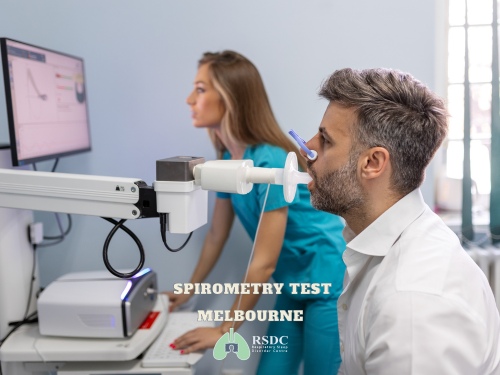


A spirometry test is the most important lung function test used to diagnose and monitor respiratory conditions such as asthma, COPD, and other breathing disorders. At RSDC Melbourne, spirometry is performed on-site at all five of our clinic locations by trained respiratory scientists and technicians.
What Is a Spirometry Test?
Spirometry measures how much air you can breathe in and out, and how fast you can exhale. It is a simple, painless, and non-invasive test that takes approximately 15 to 30 minutes. You will be asked to take a deep breath and blow as hard and fast as you can into a mouthpiece connected to a spirometer device.
The two key measurements are:
- FEV1 (Forced Expiratory Volume in 1 second) — the amount of air you can forcefully exhale in the first second. This reflects airway obstruction.
- FVC (Forced Vital Capacity) — the total amount of air exhaled during a forced breath. This reflects overall lung size.
The ratio of FEV1 to FVC (FEV1/FVC) is used to classify whether airflow limitation is obstructive (as in asthma or COPD) or restrictive (as in pulmonary fibrosis).
Why Is Spirometry Performed?
Your GP or respiratory physician may request a spirometry test to:
- Diagnose asthma, COPD, or other obstructive lung diseases
- Assess the severity of a known lung condition
- Monitor how well your treatment is working over time
- Investigate unexplained breathlessness, chronic cough, or wheezing
- Screen high-risk individuals (such as long-term smokers)
- Conduct pre-operative pulmonary assessment before surgery
- Perform occupational health screening for workers exposed to dusts, fumes, or chemicals
What Happens During a Spirometry Test at RSDC?
When you arrive for your spirometry test at RSDC Melbourne, our respiratory scientist will:
- Record your height, weight, age, and ethnicity (used to calculate your predicted values)
- Explain the technique and answer any questions
- Ask you to perform at least three acceptable forced exhalation manoeuvres
- In many cases, repeat the test after administering a bronchodilator (salbutamol puffer) to check for reversibility — this is called a pre and post bronchodilator spirometry
Results are reviewed by your referring physician or RSDC respiratory specialist, who will interpret the findings in the context of your symptoms and clinical history.
How to Prepare for Your Spirometry Test
To ensure accurate results, please follow these preparation guidelines before your spirometry appointment at RSDC:
- Avoid smoking for at least four hours before the test
- Do not use short-acting bronchodilator inhalers (e.g. Ventolin/salbutamol) for four hours before the test, unless otherwise instructed
- Hold long-acting bronchodilator inhalers (e.g. Seretide, Symbicort) for 12 hours before the test if advised by your doctor
- Avoid vigorous exercise for 30 minutes before the test
- Wear comfortable, loose-fitting clothing
- Do not eat a large meal immediately before the test
If you are unsure whether to hold your medications before spirometry, contact RSDC or your referring doctor for guidance.
Spirometry vs. Full Lung Function Testing
Spirometry is one component of a broader set of respiratory function tests (RFT). In some cases, your doctor may request additional measurements alongside spirometry:
- Lung volumes (body plethysmography or gas dilution) — measures total lung capacity, residual volume, and functional residual capacity; important for diagnosing restrictive lung disease
- DLCO/TLCO (Diffusing capacity) — measures how efficiently oxygen crosses from your air sacs into your bloodstream; used to assess emphysema, pulmonary fibrosis, and pulmonary hypertension
- Bronchial provocation testing — used to confirm asthma in patients with normal baseline spirometry
- FeNO (Fractional exhaled nitric oxide) — a marker of eosinophilic airway inflammation useful in asthma management
RSDC offers the full range of respiratory function tests at our Melbourne clinics, enabling comprehensive pulmonary assessment without referral to a hospital.
Understanding Your Spirometry Results
Your results are compared against predicted values for a healthy person of your age, height, sex, and ethnicity. A result is generally considered abnormal if it falls below 80% of the predicted value.
- Obstructive pattern (reduced FEV1/FVC ratio) — suggests asthma, COPD, or bronchiectasis
- Restrictive pattern (reduced FVC with normal or high FEV1/FVC ratio) — suggests pulmonary fibrosis, interstitial lung disease, or chest wall conditions
- Mixed pattern — features of both obstruction and restriction
- Normal spirometry — does not always exclude lung disease; your doctor will consider results alongside your symptoms
Book a Spirometry Test in Melbourne at RSDC
A GP referral is required to book a spirometry test at RSDC Melbourne. Once referred, you can arrange an appointment at any of our five locations: Camberwell, Richmond, Knox, Ferntree Gully, or Balwyn North.
If your results indicate a lung condition requiring specialist care, your RSDC respiratory physician can review the findings and develop a management plan at the same visit or shortly after — providing a seamless path from diagnosis to treatment.
Contact RSDC today to arrange your spirometry test in Melbourne.
Related articles:
Spirometry is one component of a full respiratory function testing (RFT) assessment. Your RSDC physician may request additional tests alongside spirometry to build a complete picture of your lung health.
If your spirometry results show an obstructive pattern, you may be assessed for COPD or asthma. A restrictive pattern may prompt investigation for interstitial lung disease.